
Explore Alluvi Healthcare’s UK-focused Research Peptides UK catalogue of laboratory research products and scientific resources. Our catalogue includes Retatrutide, Tirzepatide, GHK-Cu copper peptides, BPC-157 and TB-500 research products, NAD+ research products and educational research resources.
All products are presented for controlled laboratory research and scientific education only. They are not intended for human or veterinary use, consumption, injection, diagnosis, treatment or administration.
Researchers comparing Research Peptides UK options can use this catalogue to review product categories, specifications and available documentation. The Research Peptides UK catalogue is organised so visitors can move from a broad research topic to a relevant category or individual product page while keeping laboratory materials distinct from authorised medicines.
For visitors seeking research peptides UK information, the site presents educational resources and product pages for laboratory research only. Browse the Research Peptides UK catalogue by category and review each product page for current pricing, availability and genuine documentation.
Research Peptides UK Catalogue
Alluvi Healthcare provides a structured research peptide catalogue for visitors looking for clearly presented product information, specifications and laboratory research resources in the UK.
The catalogue is organised by research category so visitors can move from a general subject area to relevant products and supporting information. Each product page should clearly identify the product name, strength, format, SKU, price, availability and any genuine documentation available for that specific item.
Explore the full Research Peptides UK catalogue to view current product categories and available research materials.
Our UK-focused catalogue includes research products associated with peptide chemistry, molecular biology, analytical research, biotechnology and scientific education. The appropriate research application depends on the compound, the laboratory environment, the research objective and the applicable rules governing the work.
Explore Research Peptide Categories
Retatrutide Research Peptides UK
Explore the Retatrutide research peptide category for product specifications, available formats and research-focused information.


Tirzepatide Research Peptides UK
Browse the Tirzepatide research peptide category for current product details and laboratory research information.
Peptide Research Articles
Explore the Alluvi Healthcare UK research library for educational peptide science, analytical methods and laboratory research guides.

GHK-Cu Copper Peptides UK
Explore GHK-Cu copper peptide research products and learn more about copper peptide terminology, product format and research documentation where available.

BPC-157 and TB-500 Research
Browse the BPC-157 and TB-500 research category for product information relating to these research materials.

NAD+ Research Products UK
View the NAD+ research products category for available specifications, formats and laboratory research information.

Research Peptide Guide
Read the research peptide laboratory guide for educational information about peptide science, analytical terminology and research documentation.
Featured Alluvi Research Products
Alluvi Healthcare product pages are designe
- Sale!
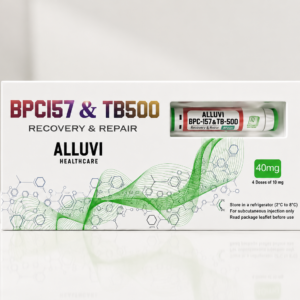 BPC-157 & TB-500 Research
Alluvi BPC-157 & TB-500 40mg (R & D Only)
£150.00Original price was: £150.00.£100.00Current price is: £100.00. Add to cart 
- Sale!
 Research Peptides
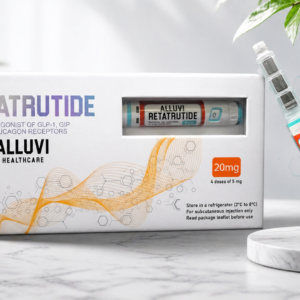
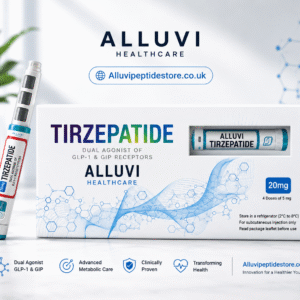
Alluvi Tirzepatide 20mg UK (R & D Only)
£150.00Original price was: £150.00.£100.00Current price is: £100.00. Add to cart - Sale!
 Research Peptides
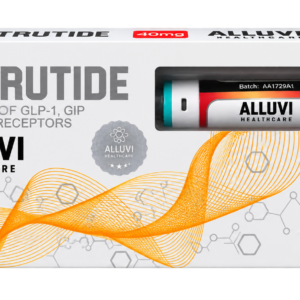
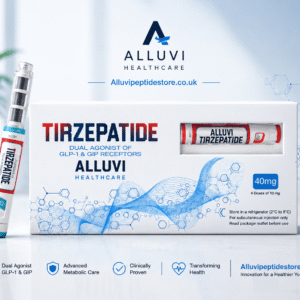
Alluvi Tirzepatide 40mg (R & D Only)
£150.00Original price was: £150.00.£120.00Current price is: £120.00. Add to cart
Understanding Peptide Research
Peptides are molecules formed from chains of amino acids connected through peptide bonds. Researchers may study peptide structure, composition, stability, analytical characteristics, interactions and behaviour under controlled laboratory conditions.
Peptide research can involve several scientific disciplines, including:
- Peptide chemistry
- Molecular biology
- Analytical chemistry
- Biotechnology
- Biochemical research
- Materials science
- Scientific education
A compound appearing in scientific literature does not automatically establish clinical effectiveness, regulatory approval or suitability for personal use. Research findings must be interpreted according to the study design, evidence quality, research model and regulatory context.
For general chemical information, researchers may consult the independent PubChem peptide information resource. For peer-reviewed scientific literature, researchers may search PubMed peptide research.
These external resources are independent scientific references and do not represent endorsements of any Alluvi Healthcare product.
A useful laboratory research product page should make important information easy to locate. Depending on the product, relevant information may include:
- Product name
- Compound name
- Strength or quantity
- Product format
- Packaging information
- SKU or product reference
- Current price in pounds sterling
- Availability status
- Storage information supplied with the product
- Batch information where available
- Genuine analytical documents where available
- Research-only classification
- Customer support information
Specifications should always reflect the actual product supplied. Alluvi Healthcare should not publish a purity percentage, certificate, laboratory test, manufacturing statement or quality claim unless it is supported by genuine product-specific documentation.
Where documentation is available, researchers should review the document carefully and compare its product name, batch reference, date, testing method and reported results with the product being considered.
Documentation and Responsible Laboratory Research
Responsible research requires more than selecting a product from an online catalogue. Researchers and institutions should evaluate the identity of the material, the suitability of the laboratory environment, the applicable safety procedures and the legal requirements connected with their work.
The UK Health and Safety Executive provides guidance on Control of Substances Hazardous to Health, including risk assessment and control measures for hazardous substances.
Researchers can also review the HSE guidance on Safety Data Sheets. Safety documentation should be reviewed alongside institutional procedures, supplier information and the requirements of the relevant laboratory.
Alluvi Healthcare does not provide personal-use instructions, dosing instructions, administration guidance, treatment protocols or medical advice.
UK Regulatory and Research Information
Research materials and medicines are not the same category. A product labelled for laboratory research should not be presented as an authorised medicine or as a personal health product.
The Medicines and Healthcare products Regulatory Agency regulates medicines, medical devices and blood components in the United Kingdom.
Researchers and organisations should review applicable requirements before purchasing, importing, storing, handling or using any research material. For additional information, consult the relevant UK guidance on unlicensed medicinal products.
Alluvi Healthcare does not present its research products as medicines and does not make claims that products diagnose, prevent, treat or cure any disease or medical condition.
Why Explore Alluvi Healthcare UK?
Alluvi Healthcare is building a structured UK-focused research resource that combines product information with accessible scientific education.
Visitors can use the website to:
- Browse research peptide categories
- Compare product specifications
- Review current prices and availability
- Explore product formats
- Find related research materials
- Read educational peptide resources
- Contact the business with product questions
- Review delivery, refund and website policies
Visit the About Alluvi Healthcare page to learn more about the company’s research-focused catalogue and information approach.
For product or website questions, use the Alluvi Healthcare contact page.
Research-Only Notice
All products displayed on this website are labelled for laboratory research and scientific education only.
They are not intended for:
- Human consumption
- Veterinary use
- Injection
- Administration
- Diagnosis
- Treatment
- Prevention of disease
- Therapeutic use
- Personal experimentation
- Dosing or self-medication
Customers, researchers and institutions are responsible for reviewing applicable laws, laboratory standards, documentation and safety requirements before purchasing or handling research materials.
Research-Focused Products
Explore a structured collection of professionally presented research products with detailed information and organised categories.
Detailed Research Information
Access product specifications, educational resources, and peptide research information designed for easier product discovery.
Professional Online Experience
Browse a clean, organised catalogue with simple navigation, detailed product pages, and dedicated customer support.
Easy Product Navigation
Find products faster through structured categories, product pages, and research collections.
Organised Product Categories
Quickly explore Retatrutide, Tirzepatide, GHK-Cu, NAD+, BPC-157 & TB-500, and educational research resources.
Educational Resources
Learn more through peptide research guides, articles, and scientific information available throughout our website.
Research peptides are specialized compounds studied in laboratory and scientific research. Researchers may investigate their molecular characteristics, interactions, stability, and other properties depending on the research objective.
Alluvi Healthcare provides an organized catalogue of research-focused products, making it easier to explore different peptide categories and access detailed product information.
Our catalogue includes Retatrutide, Tirzepatide, GHK-Cu Copper Peptides, NAD+ research products, BPC-157 & TB-500, and educational research resources.
Each category provides access to relevant products and supporting information, allowing visitors to move easily from a general research topic to individual product pages.
Explore Different Research Categories
Our website is organized into dedicated categories so you can quickly find related research products:
Retatrutide Research Peptides — Explore products within our Retatrutide collection.
Tirzepatide Research Peptides — Browse our Tirzepatide research products.
Peptide Research Articles — Explore educational resources on peptide science, analytical methods and laboratory research.
GHK-Cu Copper Peptides — Discover products focused on GHK-Cu peptide research.
NAD+ Research Products — Browse our NAD+ research collection.
BPC-157 & TB-500 — Explore our dedicated BPC-157 and TB-500 research category.
Research Peptide Bundles — Browse grouped research products available in our bundle collection.
Research Information and Product Details
We aim to make product research easier by providing organized product pages, specifications, educational articles, and category navigation. Visitors can use these resources to learn about individual products and explore related research topics.
Research materials should be used only for legitimate laboratory or scientific research and handled in accordance with applicable regulations and appropriate laboratory procedures.
Research Peptides UK: A Practical Catalogue Guide
A well-organised research catalogue should do more than place product names in a grid. It should help a laboratory, educational institution or research professional understand what each material is, which specifications are available, and where to find the information needed for responsible planning. This Research Peptides UK resource is designed to connect category pages, individual product pages and educational information in a clear sequence. Visitors can begin with a broad research topic, compare relevant product families, and then review the exact format, quantity, documentation and availability shown on the product page.
Research peptides are specialised materials investigated in controlled scientific environments. Depending on the research objective, a laboratory may examine molecular structure, peptide sequence, analytical characteristics, stability, interactions, receptor biology, formulation behaviour or other measurable properties. A research label does not establish a medical claim, clinical effectiveness, authorisation or suitability for personal use. The purpose of this homepage is therefore to provide accurate catalogue navigation and useful research context without presenting laboratory materials as medicines or therapies.
Visitors looking for research peptides UK information should use the site in layers. The Research Peptides UK catalogue provides the main category structure. Individual category pages group related materials, while individual product pages provide current product names, strengths, formats, SKUs, prices and availability. The About Alluvi Healthcare page explains the company’s research-focused positioning, and the contact page provides a route for product or website questions.
How to use the catalogue
Start with the research family that matches the subject of your work. A visitor interested in metabolic peptide research may begin with the Retatrutide or Tirzepatide categories. A visitor studying copper peptide terminology may begin with GHK-Cu. A visitor researching peptide combinations or cellular energy materials may review the BPC-157 and TB-500 or NAD+ category pages. This structure makes research peptides UK navigation easier because related products are grouped rather than presented as an unconnected list.
After opening a category, review the individual product page instead of relying only on a product card. Product cards are useful for discovery, but the detail page is the appropriate place to check the current title, format, strength, reference information, price, stock status and available documentation. Product information can change when a batch, package or catalogue record changes. Always use the current page as the final source for the information displayed by Alluvi Healthcare.
The catalogue is intended for legitimate laboratory and scientific research only. It is not a source of dosing instructions, injection instructions, treatment protocols or personal-use advice. Researchers should work within an appropriate laboratory environment, follow their institution’s procedures, review safety documentation and obtain professional advice where the nature of the work requires it. The website’s research-only notice applies to products identified for research and development purposes.
How UK Researchers Can Evaluate Research Peptide Products
Choosing a research material involves more than searching for a familiar compound name. A careful evaluation considers identity, presentation, documentation, traceability and the suitability of the material for the proposed laboratory method. The following framework can help researchers compare research peptide products UK options in a consistent way while avoiding unsupported assumptions about purity, performance or application.
Confirm the product identity
Begin by recording the complete product name exactly as shown on the page. Include the compound name, strength, formulation or format, bundle description and research-only designation where applicable. Similar names can refer to different strengths or packages, so a shortened name in a purchase note may create confusion later. Compare the product title, SKU, image, packaging description and any available batch document. If the details do not appear to match, pause the order or research plan and contact the supplier for clarification.
Review strength, format and quantity
Strength and quantity describe the product supplied; they do not prescribe how a material should be used. Researchers should record whether a product is presented as a vial, bottle, blend, capsule, topical format or another stated presentation. The amount shown on the product page should match the label and the documentation supplied with the relevant batch. A bundle may contain more than one item, but it should not be treated as a single new compound. Keep each component in the laboratory inventory under its own name and reference.
Look for product-specific documentation
Documentation is most useful when it is connected to the product and batch being evaluated. Where a certificate of analysis, analytical report or other document is available, check the product name, batch reference, date, test method and reported result. Do not assume that a document for one product or batch applies automatically to another. A supplier should not describe a product as tested, high-purity or supported by a certificate unless the claim is supported by genuine documentation that can be reviewed.
Consider traceability and record keeping
Good laboratory records make later review easier. Record the supplier, order reference, date received, product name, SKU, batch or lot information, stated storage information and the location where the material is held. If the material is transferred between authorised laboratory areas, record that movement according to institutional practice. Traceability is useful for analytical comparison, inventory control and quality review. It also prevents two similar products from being confused during a longer research project.
Separate catalogue information from scientific conclusions
A product page describes the material offered by a supplier. It does not replace a research protocol, peer-reviewed study, safety assessment or institutional review. Scientific conclusions should come from the design of the study and the data collected, not from promotional wording or a search result. Researchers can use independent databases such as PubChem for chemical reference information and PubMed for literature searches, while remembering that a paper may describe a different sequence, formulation, model or experimental condition.
Research Peptides UK Categories and Product Families
Alluvi Healthcare organises its research peptides UK catalogue into product families so visitors can move from a broad scientific subject to a more specific page. Category names are navigation aids; they do not imply that all products in a category have the same evidence base, regulatory status, research model or analytical profile. Read the individual product information carefully and use the category pages to discover related materials.
Retatrutide research peptides
The Retatrutide research peptide category is intended for visitors reviewing materials associated with Retatrutide research. Laboratory work may focus on peptide identity, receptor biology, molecular interactions, analytical characterisation or study design. A product page can help a researcher record the available strength, format and documentation for a particular item. It should not be read as a statement that the material is an authorised medicine or that research findings establish a personal-use outcome.
Researchers comparing Retatrutide materials should keep the product strength and package description separate from the scientific question being studied. A larger labelled quantity does not automatically indicate a different biological result, and a product bundle should not be treated as a validated research protocol. Use the current category and product pages for catalogue information, then consult appropriate scientific sources and institutional procedures for the research itself.
Tirzepatide research peptides
The Tirzepatide research peptide category provides a structured route to Tirzepatide product information. Researchers may be interested in dual-pathway receptor biology, peptide analysis, molecular modelling or comparative laboratory studies. The exact research question, assay, model and analytical method determine what information is relevant. Alluvi Healthcare presents these materials for controlled research and does not provide instructions for administration, dosing or treatment.
When reviewing a Tirzepatide product, compare the page title with the strength, SKU, format and available documents. Keep the spelling consistent in research notes and inventory records. This is particularly important when a catalogue has contained a historic spelling variation in a URL or older product record. The current product title has been corrected to Tirzepatide while the existing product URL is retained for continuity.
Peptide research literature
The research library supports visitors reviewing peptide-related laboratory research and educational information. Research may involve peptide chemistry, receptor-related models, stability observations or analytical comparison. The presence of a compound in scientific literature does not mean that every product with a similar name has the same formulation or documentation. Researchers should compare the exact catalogue record with the material received before beginning a study.
Product pages can help organise information about format, quantity, packaging and available analytical records. They should be used alongside a research plan, laboratory risk assessment and independent literature review. Alluvi Healthcare does not present research products as authorised medicines and does not publish personal-use instructions on this catalogue.
GHK-Cu copper peptide research
The GHK-Cu copper peptide category is designed for visitors exploring copper peptide terminology and product information. GHK-Cu research can involve peptide structure, copper complexation, analytical methods, formulation questions or other laboratory topics. The term “copper peptide” should not be treated as a guarantee of a particular cosmetic, therapeutic or biological result. The relevant product page and documentation should be checked for the actual presentation supplied.
Researchers should distinguish between a pure research material, a formulated topical product and a general educational reference. These formats can have different ingredients, concentrations, stability considerations and analytical requirements. When the research question concerns a specific sequence or complex, document the identity and formulation precisely and avoid substituting one product type for another without a justified study design.
BPC-157 and TB-500 research materials
The BPC-157 and TB-500 research category groups product information associated with two separate research materials. A combined product page or bundle should not be interpreted as proof that the compounds are validated for combined use. Researchers should record each component separately, review its documentation and ensure that the proposed laboratory method is appropriate for the material under investigation.
Research descriptions for BPC-157 and TB-500 should remain scientifically cautious. Published experiments may differ in model, concentration, delivery method, species, controls and endpoints. A laboratory catalogue cannot convert preliminary findings into clinical advice. Use the product page for supply information and use independent scientific literature, institutional review and appropriate laboratory controls for research decisions.
NAD+ research products
The NAD+ research products category is intended for visitors reviewing materials associated with NAD+-related biochemical research. NAD+ is relevant to scientific discussions of cellular energy and cofactor biology, but a catalogue entry does not establish a health claim or personal-use application. Researchers should confirm whether the exact product is a research compound, a formulated product or another stated presentation before comparing it with a published study.
For NAD+ research, record the product form, quantity, packaging, storage information and any analytical documentation. If a paper examines a particular solution, salt, purity level or experimental preparation, do not assume that a different catalogue format is equivalent. A clear research record should identify the material actually used and the conditions under which observations were made.
Research peptide bundles
The research peptide bundles category helps visitors review grouped catalogue options. Bundles can support inventory planning when a laboratory has more than one independent research question, but they are not a substitute for a protocol and should not be described as a combined treatment or performance programme. List each item separately in the inventory and check the product page for the current contents, price and availability.
Understanding Peptide Chemistry and Laboratory Research
Peptides are chains of amino acids connected by peptide bonds. Their sequence, length, charge, conformation and surrounding environment can influence the way researchers characterise them. Laboratory peptide research may use methods that examine identity, purity, mass, aggregation, stability or interactions. The correct analytical approach depends on the material, the method, the research question and the controls available to the laboratory.
Sequence identity is an important starting point. Two materials can have related names while differing in amino-acid sequence, terminal modification, salt form, formulation or concentration. Researchers should not treat a familiar product name as complete chemical identification. Use the product label, specification sheet and any genuine analytical document to build a precise record, then compare that record with the requirements of the proposed study.
Stability is also a research question rather than a promise. Peptide materials can be affected by temperature, light, moisture, pH, container choice, agitation and time. The stability of one formulation cannot automatically be applied to another. A laboratory should follow the supplier’s stated storage information, use its own documented procedures and investigate any change in appearance, container condition or analytical result according to its quality system.
Analytical results should be interpreted in context. A single analytical technique answers a particular question and may not describe every characteristic of a material. Researchers should consider the method’s limitations, sample preparation, reference standards and reporting units. A clear report identifies what was tested, how it was tested and what the result means; it does not turn one measurement into a broad claim about safety or effectiveness.
Documentation, HPLC, Mass Spectrometry and Certificates of Analysis
Documentation helps a research team understand what is known about a material and what still needs to be confirmed. A certificate of analysis, when genuinely available, may include product identification, batch details, a test date, analytical methods and reported results. The value of the document depends on its connection to the supplied product and the quality of the testing information. Researchers should retain the relevant document with the purchase and laboratory records.
What HPLC information can show
High-performance liquid chromatography, often abbreviated as HPLC, separates components in a sample so that a laboratory can examine a chromatographic profile. Depending on the method and reference standard, an HPLC result may help a laboratory assess a reported purity or identify differences between samples. HPLC is not a universal guarantee of identity, safety, clinical suitability or manufacturing quality. The method, column, solvent system, detector, reference standard and interpretation should be considered.
What mass spectrometry can show
Mass spectrometry can provide information related to molecular mass and may support identity assessment when used with appropriate controls. The result should be interpreted alongside the sample preparation, expected mass, instrument method and any relevant modifications. Mass spectrometry alone does not answer every question about purity, contaminants, sterility, stability or formulation. A responsible report explains the scope of the test rather than presenting it as proof of every product attribute.
How to read a certificate
When reviewing a certificate of analysis, match the product name and batch number with the package received. Check whether the report identifies the laboratory, test date, method and acceptance criteria. Look for unexplained gaps, inconsistent units or a result that appears to describe a different product. If the document is not product-specific, do not attach it to the product record as though it were. Ask the supplier for clarification before relying on the document in a research file.
Quality words require evidence
Words such as premium, research grade, high purity, laboratory tested and quality assured should be supported by meaningful evidence. They should not be used as substitutes for a specification or analytical report. Alluvi Healthcare aims to present quality-focused information carefully, and product claims should remain limited to what the current product record and documentation support. Researchers should make their own assessment based on the evidence relevant to the study.
Independent scientific references
Independent sources can provide useful context, but they should not be confused with supplier documentation. PubChem can help with general compound and chemical reference information, while PubMed can help locate published research. A scientific paper may use a different source, sequence, concentration, formulation or model than the product under review. Read the methods section and compare the material described in the paper with the exact item in the catalogue.
Storage, Handling and Laboratory Planning
Storage and handling are part of research quality. Before receiving a material, the laboratory should identify an appropriate storage area, review the product information, confirm access controls and ensure that the responsible personnel understand the relevant safety procedures. The label, product page and supplied documentation should be retained so that the material can be identified after it enters the laboratory.
Do not create a storage instruction from a search result or copy an instruction from a different compound. Follow the product-specific information available from the supplier and the laboratory’s own validated procedures. If the information is incomplete, contact the supplier or the responsible laboratory professional. A catalogue can provide product information, but it cannot replace a site-specific risk assessment or an institution’s safety system.
Inventory records should include the date received, product name, SKU, strength, format, batch or lot reference, quantity, location and status. If the laboratory opens or transfers a container, record that event according to its procedures. Clear records support repeatability and reduce the chance of a sample being confused with a similar item. They also make it easier to identify which material was associated with a particular experiment or analytical result.
Laboratories should also plan for waste, spills and damaged packaging before work begins. The correct response depends on the material, formulation, quantity, local rules and institutional policy. Researchers should consult their safety officer and relevant documentation rather than relying on general internet advice. The Alluvi catalogue does not provide emergency procedures, medical advice or personal-use handling instructions.
Research Planning, Controls and Data Recording
A useful research plan defines the question before a material is selected. Write down the purpose of the study, the model or analytical system, the variables being observed, the controls, the measurements and the criteria for interpreting results. This makes it easier to decide which product information matters and prevents the catalogue description from becoming an unexamined research conclusion.
Controls help researchers distinguish an observed result from background variation. Depending on the study, controls may include a vehicle or matrix control, a reference standard, a blank, a positive control or a comparison material. The appropriate control is determined by the method and should be set by qualified personnel. The presence of a control does not make a material safe for personal use; it simply supports a more reliable scientific comparison.
Record the exact material used in each experiment. Include the product name, batch, format, preparation details permitted by the laboratory protocol, date, operator, instrument and relevant environmental conditions. Avoid vague notes such as “peptide sample” when the study contains several related compounds. Strong traceability makes later review, replication and error investigation more straightforward.
When a result is unexpected, record the observation rather than rewriting the data to fit an assumption. Review the sample identity, storage history, analytical method, controls, instrument status and calculations. A catalogue page may help confirm the supplied product information, but it cannot determine why a result occurred. Investigations should follow the laboratory’s quality and safety procedures.
UK Research Context and Responsible Compliance
UK researchers should consider the rules that apply to their institution, laboratory, material, method and intended activity. Research-labeled products are not automatically authorised medicines, and a product page should not be used to make a medicinal claim. Regulatory classification can depend on the product presentation, intended use, claims made and the circumstances of supply. When a question is regulatory, consult the relevant official authority or qualified professional.
The Health and Safety Executive provides information about controlling hazardous substances through its COSHH guidance. Researchers can also review official information about Safety Data Sheets. These resources do not replace a laboratory’s own assessment, but they can help institutions understand why hazard identification, control measures, training and documentation matter.
UK medicines information should be checked against official government sources. The GOV.UK guidance on unlicensed medicinal products provides regulatory context for a specific area of medicine supply. It should not be interpreted as approval of any Alluvi product. The Alluvi catalogue remains focused on research and scientific information, not medical supply or treatment.
Responsible research also includes honest communication. Do not describe a preliminary laboratory observation as a proven health benefit. Do not imply that a compound can diagnose, prevent, treat or cure a condition unless an appropriate authorised source supports that statement and the claim is legally permitted. Do not publish personal-use instructions for research products. Clear boundaries protect readers and help a research website remain useful and credible.
Choosing a Research Peptide Supplier in the UK
Visitors comparing a research peptide supplier UK should evaluate the clarity of the catalogue as well as the product name. A useful supplier website should provide identifiable contact information, understandable product categories, current pricing, a secure checkout process, a stated research-only position and a way to ask questions. The website should make it possible to distinguish product facts from educational context and should avoid exaggerated medical or performance claims.
Documentation is another important comparison point. A supplier should explain whether a certificate, analytical report or batch document is available for a particular product. Researchers should be able to understand what the document covers and what it does not cover. An unsupported purity statement is less useful than a specific, verifiable document. If no document is available, the product page should say so rather than implying that testing has occurred.
Catalogue consistency matters as well. Product titles, strengths, SKUs, categories, images and page descriptions should agree with one another. A spelling variation can make it harder to search, order or record a material correctly. Alluvi Healthcare is continuing to standardise its product catalogue so that visitors can move from a category page to a product page without encountering conflicting names or outdated navigation.
Customer support should be able to answer catalogue questions without crossing into medical advice. Suitable questions include product format, current availability, shipping information, documentation status or the location of a page. Questions about diagnosis, treatment, personal administration or individual health should be directed to an appropriately qualified healthcare professional. The Alluvi Healthcare contact page is available for website and product-information enquiries.
Using Internal Links to Explore Research Peptides UK Information
Internal links help visitors and search engines understand how the research peptides UK website is organised. The main catalogue links to category hubs, category hubs link to products, and educational sections explain terminology that appears on product pages. This structure supports discovery without forcing one homepage to answer every possible question in a single paragraph.
For a broad overview, visit the UK research peptide catalogue. For product-family navigation, review the Retatrutide category, Tirzepatide category, Semaglutide category, GHK-Cu category, BPC-157 and TB-500 category, NAD+ category and research bundles.
Visitors who already know the material they are reviewing can open the Alluvi Healthcare shop to see current catalogue items. The shop is a discovery page; the product detail page remains the appropriate place to verify the exact name, strength, format, price and availability. Internal links should guide a visitor to the next useful page rather than repeat the same phrase without adding information.
Research Peptides UK Catalogue Support
This Research Peptides UK catalogue is organised to help laboratories compare research-focused product families, review current catalogue details and move from broad research topics to individual product pages. Each Research Peptides UK category is intended to make navigation clearer without turning a catalogue description into a medical or therapeutic claim.
When reviewing Research Peptides UK listings, record the exact product name, stated strength, format, SKU, batch information and available documentation. The Research Peptides UK product pages should be read together with the relevant laboratory procedures, safety documentation and institutional requirements. A Research Peptides UK listing does not provide dosing, injection, treatment or personal-use instructions.
Researchers using the Research Peptides UK catalogue can begin with the main category page, compare related materials, and then open the exact product record before making a research-planning decision. This layered Research Peptides UK structure keeps category information, product specifications and responsible research guidance connected in one place.
Frequently Asked Questions About Research Peptides
1. What are research peptides?
Research peptides are peptide materials studied in controlled laboratory, scientific or educational settings. Research may focus on their molecular structure, chemical properties, stability, analytical characteristics or other scientific features.
2. Does Alluvi Healthcare sell medicines?
Alluvi Healthcare’s research catalogue is not presented as a catalogue of authorised medicines. Products labelled for research are not intended for human or veterinary use, diagnosis, treatment or administration.
3. Are Alluvi research products for human use?
No. Products labelled for laboratory research are not intended for human consumption, injection, administration, personal experimentation or self-medication.
4. What research peptide categories are available?
The catalogue includes Retatrutide, Tirzepatide, GHK-Cu copper peptides, BPC-157 and TB-500 research products, NAD+ research products and educational research resources.
5. What information should I review before selecting a product?
Review the product name, strength, format, quantity, SKU, price, availability, storage information, available documentation and research-only notice. Researchers should also consider their institutional requirements and applicable regulations.
6. Does every product have a certificate of analysis?
Documentation varies by product and batch. A certificate or analytical document should only be described as available when genuine product-specific documentation exists.
7. Does Alluvi Healthcare provide dosing instructions?
No. Alluvi Healthcare does not provide dosing, injection, administration or personal-use instructions for research products.
8. Where can I find UK research peptide products?
Visitors can browse the Alluvi Healthcare UK research peptide catalogue and select the category relevant to their research information needs.
9. How can I review current price and availability?
Current price and availability are displayed on the relevant product page and may change. Visit the Alluvi Healthcare shop to view the current catalogue.
10. Where can I ask a question?
For product or website questions, contact Alluvi Healthcare through the contact page.
Explore the Alluvi Healthcare Research Catalogue
Explore the Research Peptides UK catalogue, review individual product information and read the available scientific resources.
For laboratory research only. Not for human or veterinary use. Not for consumption, injection, diagnosis, treatment or administration.